Overview: Electricians
An electrician here works on consumer units, circuits, sockets and lighting, earthing and bonding, showers and cookers, garden and outbuilding supplies, and charge points for an electric car. The board in most homes is now a consumer unit with RCD or RCBO protection, and an old fuse board without it is the usual reason people call.
In England, three kinds of domestic work are notifiable under Part P of the building regulations: a new circuit, a consumer unit replacement, and changes to circuits close to a bath or shower. An electrician registered with a competent person scheme such as NICEIC or NAPIT can certify the job and notify the council themselves. Anyone outside a scheme means you apply to building control and pay for the inspection. Settle that question before work starts, and hold out for the certificate at the end.
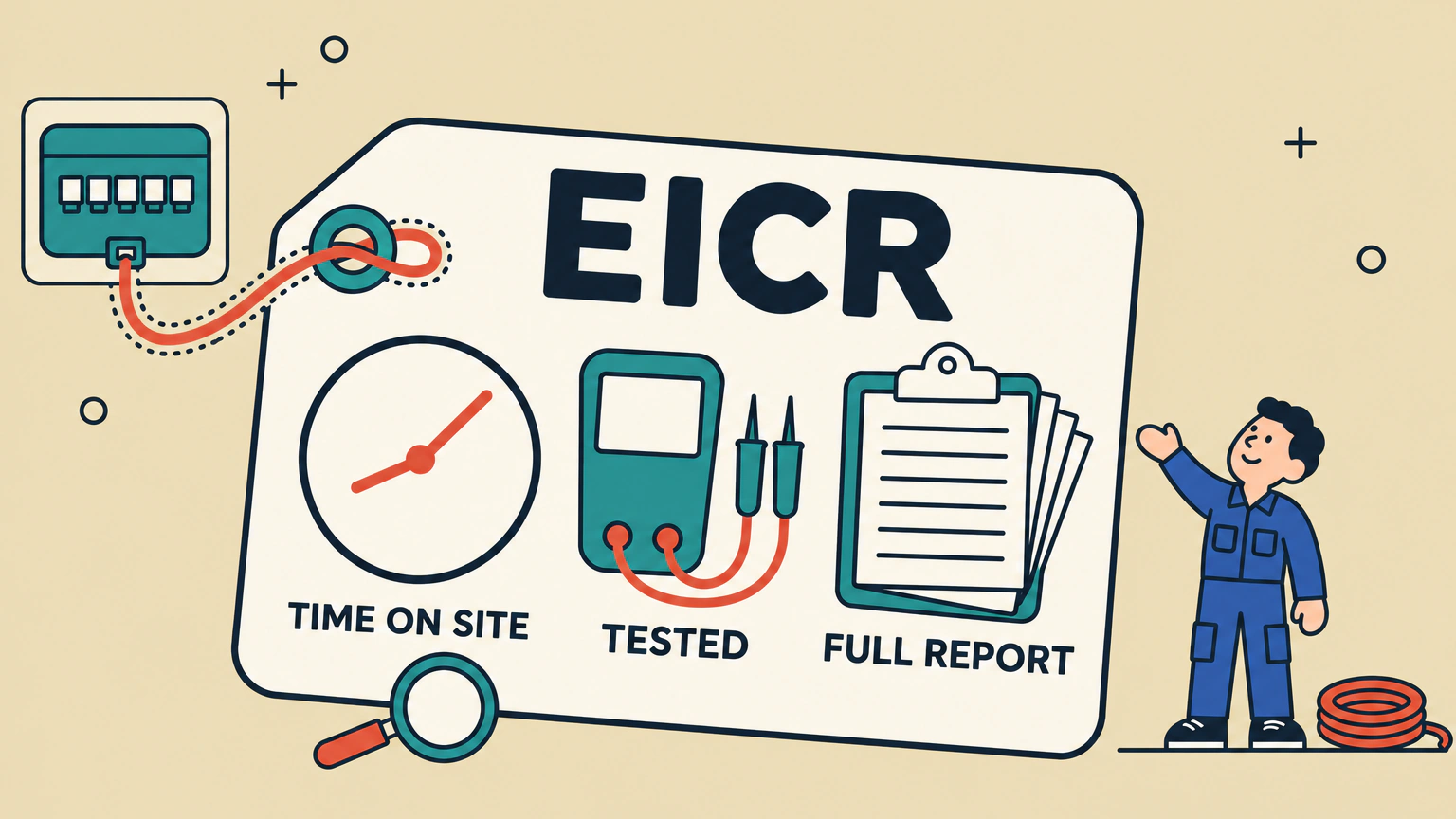
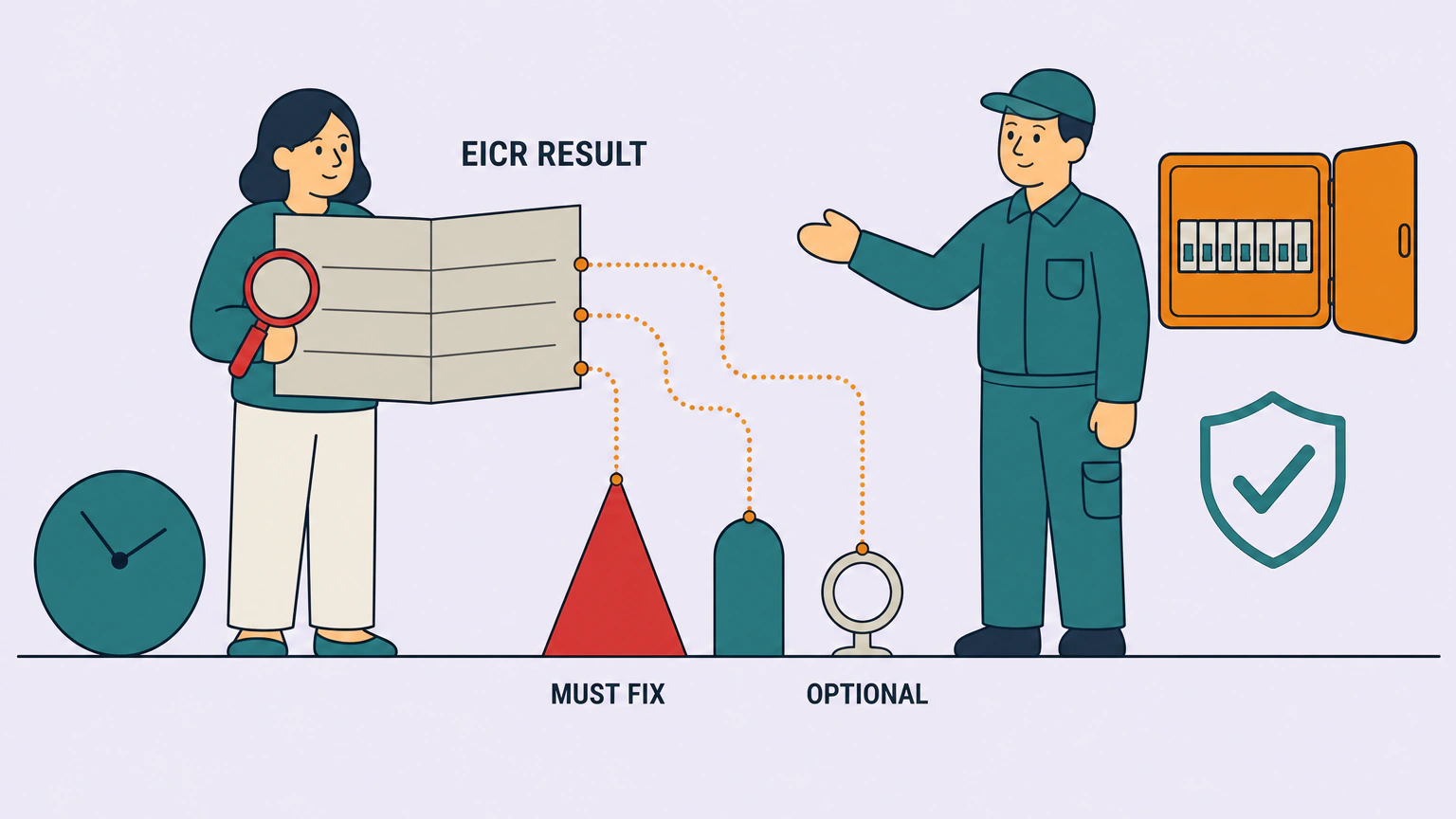
An EICR is the inspection report on an existing installation. Landlords need one at set intervals, buyers often ask, and it is worth having on an older house before you rewire on guesswork. Read the codes on it, because some findings are dangerous and others are only recommendations.
Use the region and town lists below to find electricians covering your area.
Electrician costs in the UK
Start with the price for the whole job: attendance, materials, testing and completion paperwork. The rows below distinguish time charges, an entry budget for a small installation and larger project budgets.
| Job or service | Guide price | Scope |
|---|---|---|
| Weekday attendance and first hour | £60–£140per visit | One electrician attending locally during normal weekday hours, with up to one hour on site.Confirm when the clock starts and the charge for further time.Included and extra costsIncluded: Attendance within the usual service area; First hour of labour Extra or separately priced: Replacement parts; Further time; Out-of-hours or priority premiums |
| Further labour during the same visit | £60–£100per hour | One electrician continuing a weekday job after the initial hour.Many firms bill in 30-minute blocks; compare the billed increment as well as the hourly rate.Included and extra costsIncluded: Labour time Extra or separately priced: Materials; Another visit |
| Add one double socket | From about £100per installed socket | One standard socket added to a suitable nearby circuit using a short, accessible route.Ask for one total including attendance, the socket, cable and any wall repairs. Entry budget for a simple installation; the final price depends on the route, access and attendance terms.Included and extra costsIncluded: Standard socket installation; Electrical testing Extra or separately priced: New circuit or board upgrade; Plastering and decorating |
| Electrical condition report for a three-bedroom house | £160–£350per report | Inspection of an accessible three-bedroom house; confirm the consumer-unit and circuit count in the quote.Report only. Price any necessary remedial work separately after the findings are explained.Included and extra costsIncluded: Inspection and testing; Written condition report Extra or separately priced: Remedial repairs; Extra buildings or installations not in the quote |
| Replace a domestic consumer unit | £550–£1,200per installation | Replacement of a domestic metal consumer unit in its existing position, with a specified circuit count and protective devices, using suitable existing wiring.Compare individual RCBO protection and surge protection in each quote; fault repairs and earthing upgrades are extra.Included and extra costsIncluded: Board and the agreed circuit protection; Installation and testing; Installation certificate and applicable notification Extra or separately priced: Existing wiring faults; Earthing or supply upgrades; Surge protection if not in the specified board package |
| Full rewire of a three-bedroom house | £5,500–£11,100per project | A conventional three-bedroom house with standard accessories; the quote needs a room-by-room point schedule and an agreed access plan.Agree electrical points, board specification, occupancy arrangements and the finish left for other trades.Included and extra costsIncluded: Replacement wiring and standard accessories; Consumer unit within the agreed rewire specification; Testing and completion certification Extra or separately priced: Final plastering and redecoration; Specialist controls; Additional outbuilding installations |
What changes the price?
- Attendance and urgency. Compare the first-hour total and later billing increments. Evenings, weekends and priority visits can use different rates.
- Existing circuits and protection. Fault repairs, earthing, protective devices and the number of circuits can change the board or installation quote.
- Cable routes and finish. Accessible routes and a settled point schedule reduce extra labour. Chasing, plastering and decorating need an agreed scope.
Ask before you accept a quote
- What is the total including attendance, parts, VAT, testing and the required paperwork?This makes a low labour rate comparable with an inclusive job price.
- Which existing faults or extra work could change this price, and will I approve a written variation first?The condition of the existing installation can change the work needed.
- What finish will you leave, and can my smaller jobs share one visit?Agree responsibility for wall repairs and avoid paying separate minimum charges.
A practical way to control the cost
Send a single list of small jobs with photos before booking. For a rewire, settle the socket, lighting and appliance schedule before the quotation is agreed.
Frequently asked questions
What electrical work needs a permit?
In England, a new circuit, a consumer unit replacement, and changes to circuits close to a bath or shower are notifiable under Part P. A scheme registered electrician self certifies and notifies the council. Outside a scheme, you apply to building control and pay for the inspection. Either route should leave you holding an installation certificate, which buyers do ask for.
What does a panel or fuse board upgrade involve?
The old board comes out, a consumer unit with RCD or RCBO protection goes in, every circuit is tested before and after, and main bonding to the gas and water services is corrected while things are accessible. Expect hidden faults to surface: tired circuits fail insulation testing, and the new board will not live with them.
Is old wiring in my house a problem?
Rubber insulated cable and rewireable fuse boards belong to an era that has gone. Cable that old crumbles at the ends and wants replacing rather than patching. Missing bonding, no RCD protection and undersized earths are common findings. An EICR grades what is genuinely dangerous against what is simply out of date, which is the list you work from.
What should I know before adding a car charger?
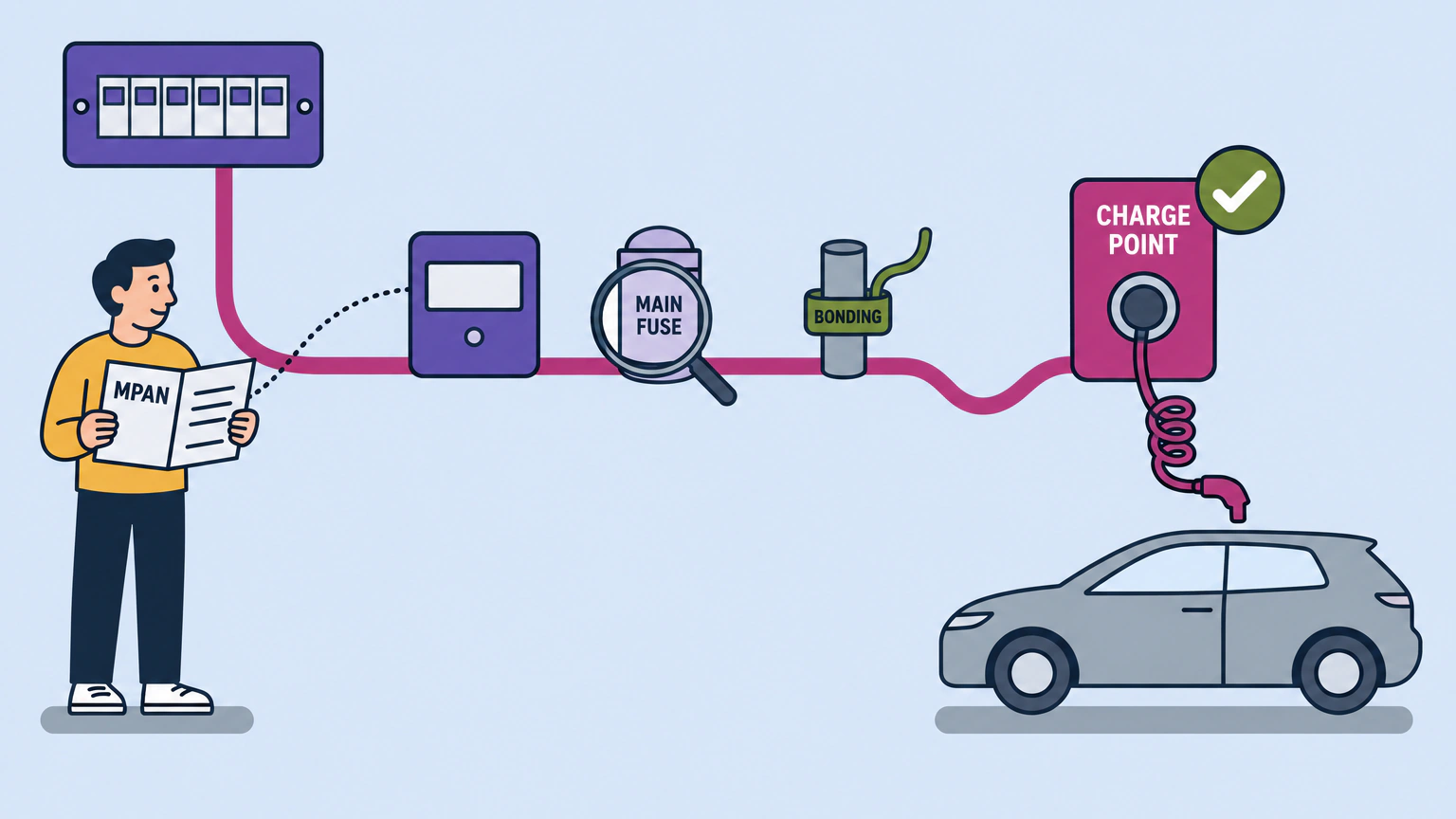
The electrician has to look at the earthing arrangement of your supply, because most homes need either an earth rod or a charger with the protection built in. They will check the main fuse can take the load and may need to notify the network operator. The install is notifiable, so expect a certificate when they finish.
Why do my breakers keep tripping?
An RCD that trips is finding leakage to earth. Work through it one circuit at a time: unplug everything, reset, then add appliances back until it goes again. Immersion heaters, outdoor sockets after heavy rain and tired appliances are the usual culprits. A board with individual RCBOs confines the fault to one circuit instead of blacking out the house.